
Camera shake is the unwanted movement of your camera while taking a photo, which causes blur across the entire image. It matters because even slight movement can reduce sharpness, making your photos look soft, unprofessional, and less detailed—especially in low light or when using zoom lenses.
Camera shake happens when your camera moves slightly during the moment the photo is being captured (exposure).
This movement causes motion blur across the entire image, making everything look soft or smeared instead of crisp and sharp.
Unlike other types of blur, camera shake:
- Affects the whole frame evenly
- Is caused by the photographer’s hands or body movement
- Is more noticeable at slow shutter speeds
In simple terms:
If your hands move—even a tiny bit—while taking the shot, your image loses sharpness.
Camera shake happens when your camera moves slightly during the moment the photo is being captured (exposure).
This movement causes motion blur across the entire image, making everything look soft or smeared instead of crisp and sharp.
Unlike other types of blur, camera shake:
- Affects the whole frame evenly
- Is caused by the photographer’s hands or body movement
- Is more noticeable at slow shutter speeds
In simple terms:
If your hands move—even a tiny bit—while taking the shot, your image loses sharpness.
Camera Shake vs Other Types of Blur
Many beginners confuse camera shake with other issues. Let’s quickly clarify:
1. Camera Shake
- Whole image looks blurry
- Caused by hand movement
- Happens at slow shutter speeds
2. Subject Motion Blur
- Only moving subjects appear blurry
- Background stays sharp
- Caused by subject movement
3. Focus Blur
- Image looks soft in specific areas
- Happens when focus is incorrect
- Some parts may still be sharp
Key difference:
If everything is blurry → it’s likely camera shake
| Type of Blur | What It Looks Like | Cause |
|---|---|---|
| Camera Shake | Entire image is blurry | Camera movement |
| Motion Blur | Only moving subject is blurry | Subject movement |
| Focus Blur | Only certain areas soft | Wrong focus |
Why Camera Shake Matters for Sharp Photos
Camera shake isn’t just a small problem—it directly impacts your photography in several important ways:
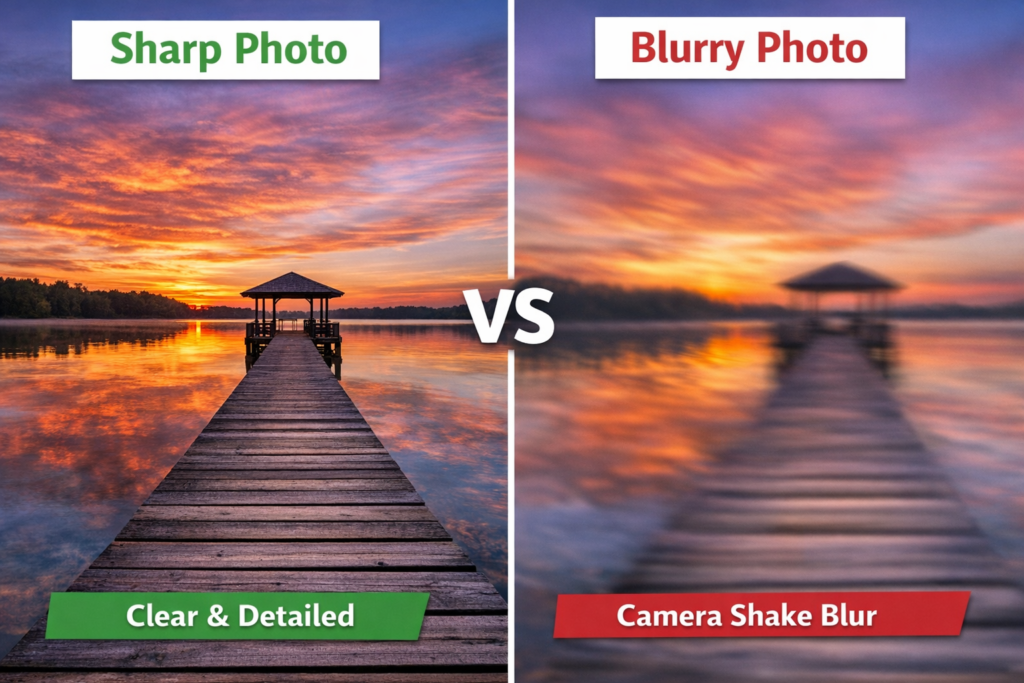
1. Reduces Image Quality
Blur destroys fine details like:
- Texture
- Edges
- Facial features
Even a great composition becomes unusable if it’s not sharp.
2. Looks Unprofessional
Sharpness is one of the first things viewers notice.
Blurry images:
- Look amateur
- Reduce trust (especially for portfolios or blogs)
- Lower engagement online
3. Limits Cropping Flexibility
If your image is sharp, you can crop freely.
If it’s blurry:
- Cropping makes it worse
- Details disappear quickly
4. Becomes Worse in Low Light
Camera shake is most common when:
- Shooting indoors
- Shooting at night
- Using slower shutter speeds
This is why beginners struggle with sharp photos in low-light conditions.
5. Gets Worse with Zoom (Telephoto)
The more you zoom in:
- The more shake is amplified
- The harder it is to keep the camera steady
Example:
- 24mm lens → easier to stabilize
- 200mm lens → very sensitive to movement
What Causes Camera Shake?
Camera shake doesn’t come from just one factor—it’s usually a combination.
1. Physical Causes (Your Body)
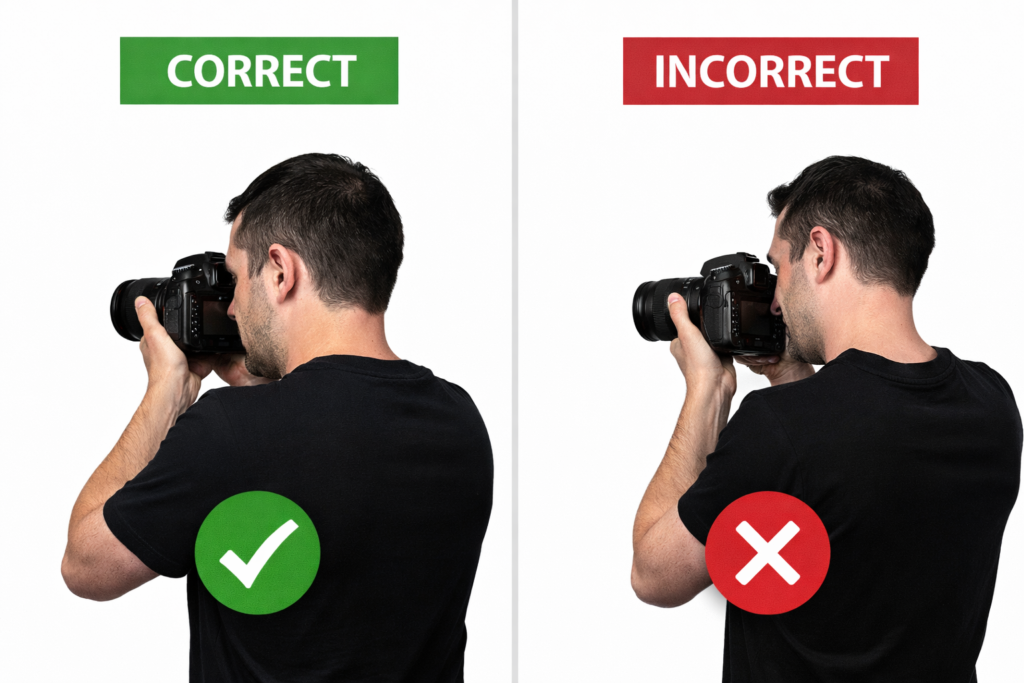
Your body plays a huge role in stability.
Common causes:
- Shaky hands
- Poor grip
- Tired muscles
- Unstable posture
Even breathing can introduce small movements!
2. Camera Settings
Your settings can either reduce or amplify shake.
Key factors:
- Slow shutter speed
- Low ISO forcing longer exposure
- Small aperture in low light
If your shutter stays open longer, there’s more time for movement.
3. Environmental Conditions
External factors also matter:
- Low light → slower shutter speed
- Wind → physical movement
- Uneven ground → poor balance
The Most Important Rule: Shutter Speed
To avoid camera shake, photographers use a simple guideline:
Minimum Shutter Speed≈Focal Length1
Example:
- 50mm lens → use at least 1/50s
- 100mm lens → use at least 1/100s
- 200mm lens → use at least 1/200s
Faster shutter = less blur
Why This Rule Works
Longer lenses magnify movement.
So you need a faster shutter speed to “freeze” that movement.
Beginner-Friendly Insight
Most beginners think:
“My camera isn’t good enough.”
But in reality:
Camera shake is usually a technique + settings problem—not a gear problem.
Modern cameras already have:
- Image stabilization
- High ISO performance
You just need to use them correctly.
When Camera Shake Is Most Likely
You’ll notice it most in these situations:
- Indoor photography
- Night photography
- Zoom/telephoto shooting
- One-handed shooting
- Long exposure shots
- Heavy camera/lens setups
Can Camera Shake Be Fixed After Taking a Photo?
Short answer: Sometimes—but not always.
Editing tools can:
- Slightly sharpen images
- Reduce minor blur
But they cannot fully fix heavy shake.
Prevention is always better than correction.
Why Learning This Early Changes Everything
Understanding camera shake early helps you:
- Take sharper photos instantly
- Waste fewer shots
- Improve faster as a photographer
- Build confidence with your camera
It’s one of the highest-impact skills you can learn.
Real-Life Example
Imagine this:
You take a perfect sunset photo:
- Great composition ✅
- Perfect colors ✅
- Amazing lighting ✅
But…
It’s slightly blurry.
That one issue makes the entire image unusable.
That’s the power (and danger) of camera shake.
Key Takeaways
- Camera shake = unwanted movement during exposure
- It causes blur across the entire image
- It’s most common at slow shutter speeds
- It worsens with zoom and low light
- It directly affects image quality and professionalism
- It is completely fixable with proper technique and settings
FAQs
What is camera shake in simple terms?
Camera shake is when your camera moves while taking a photo, causing the image to look blurry instead of sharp.
How do I know if my photo has camera shake?
If the entire image looks blurry (not just one part), it’s likely caused by camera shake.
What causes camera shake the most?
The biggest cause is using a slow shutter speed while shooting handheld.
Does image stabilization remove camera shake?
It helps reduce it, but it doesn’t eliminate it completely—especially in very low light.
Can beginners fix camera shake easily?
Yes. By improving:
- Hand position
- Shutter speed
- Camera settings
you can see immediate improvement.